The Integration Gap: When Your Tools Don't Talk to Each Other
Your CRM, your accounting software, your project management platform, they're all doing their jobs. But if they aren't connected, your team is the integration layer. That's expensive.
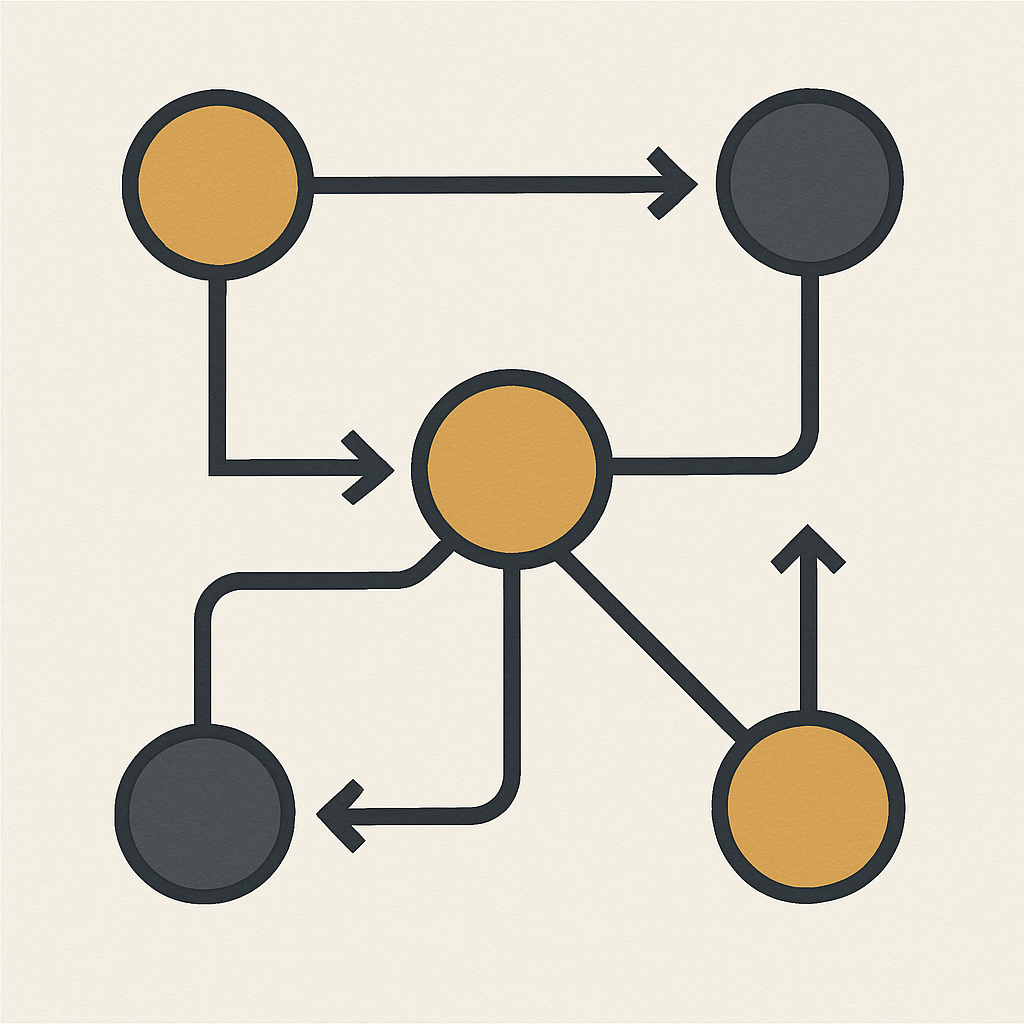
The average business uses 130+ software applications. Enterprise companies use significantly more. Most of those tools were selected independently, for specific purposes, by different teams at different times. The result is a technology stack that looks more like a collection of silos than a coherent operating system.
This is what we call the integration gap, and it's one of the most common and costly operational problems we encounter.
Your Team Is the Integration Layer
When two systems don't communicate, someone has to move the data between them. That someone is usually your most capable operations person, the one who knows both systems well enough to do it correctly.
The moment that person leaves, the process breaks. But even before they leave, the process is fragile. It depends on a single human doing a repetitive, low-value task with enough consistency and accuracy to keep both systems in sync.
This is not a technology problem. It's an organizational risk.
What Integration Actually Looks Like
System integration doesn't always mean a complex enterprise middleware solution. In many cases, the most impactful integrations are relatively straightforward:
- Your CRM automatically creates a project record in your PM tool when a deal closes
- Invoice data from your accounting software feeds into your reporting dashboard without manual export
- A new client form submission triggers a welcome sequence, creates a folder, and notifies the account manager, simultaneously
These aren't futuristic capabilities. They're available today, with tools most businesses already pay for. The gap isn't in the tools, it's in the connections between them.
The Cost of Disconnected Systems
Beyond the time cost, disconnected systems create a data coherence problem. When the same information lives in multiple places, updated independently, it diverges. Sales has one version of a client record. Finance has another. Support has a third.
Which version is correct? No one knows. So decisions get delayed, escalations happen, and trust in the data erodes. Teams start maintaining their own spreadsheets "just to be safe", which only compounds the problem.
How to Approach Integration
The first question to ask isn't "which tool should we integrate?" It's "what decisions are being made poorly because we don't have unified data?"
That question points you toward the integrations that will have the most impact on your business outcomes, not just the ones that are technically satisfying to build.
The second question is: "what would need to be true for this process to require no human intervention?" Working backward from that ideal state reveals exactly which integrations to prioritize.
A Note on Over-Engineering
Not every integration needs to be real-time and bidirectional. Many of the highest-value connections are simple, unidirectional data syncs that run on a schedule. Before investing in a complex architecture, ask whether a simpler solution solves the actual problem. It usually does.
The goal is never the most sophisticated system. The goal is the most reliable one.
Ready to act on this?
Let's talk about your workflows.